
Your Guide to Operating a Bar and Restaurant Ice Machine
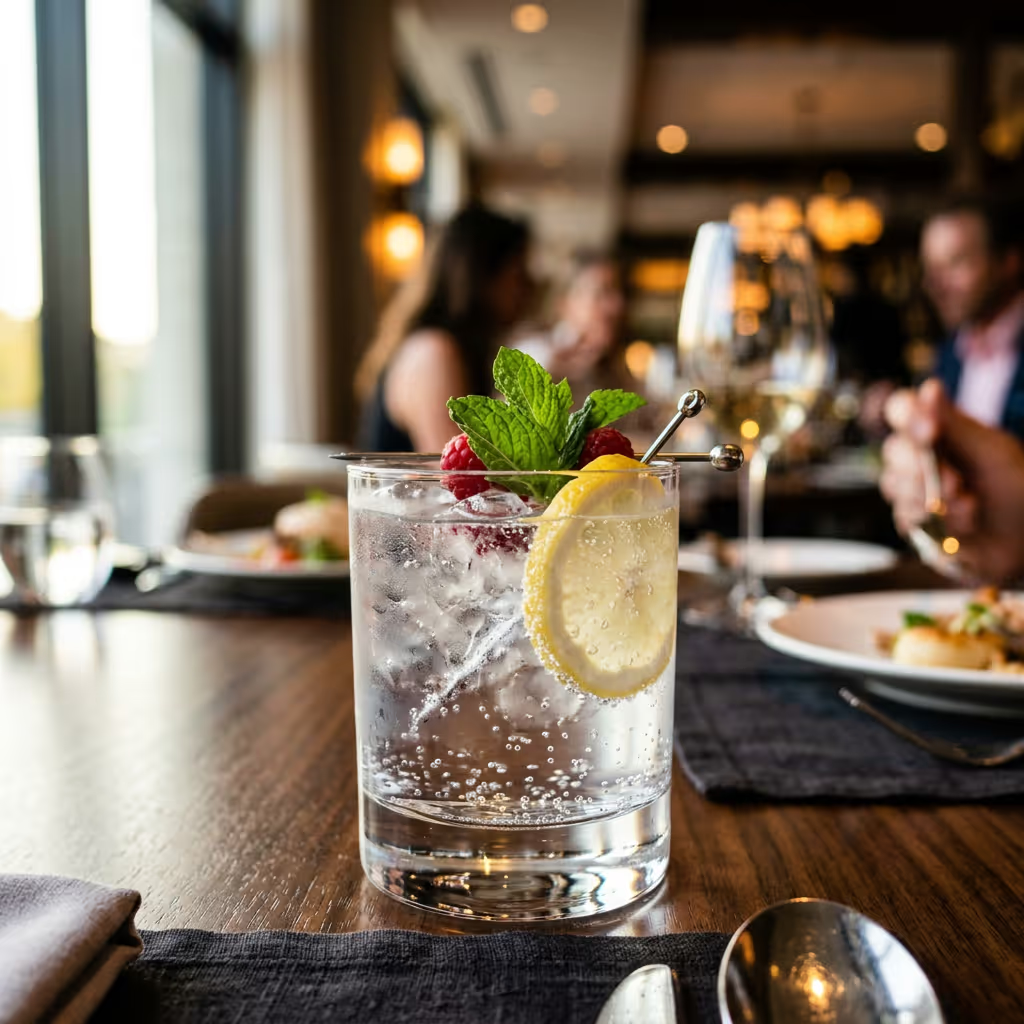
Your Guide to Operating a Bar and Restaurant Ice Machine
What Installation-Type Ice Machine Do I Need for My Bar or Restaurant?
There are numerous different types of ice machines to consider. You can choose undercounter ice maker, a free-standing modular unit that pairs with a bin, a countertop dispensing machine that also serves water, and more! Nominal width, counter depth, and other size-related factors are one of the most important priorities to keep in mind, but the style of ice machine you choose depends on the type of business you run.
Ice machines for company break rooms have low demand and don't require a gourmet ice type; this is a case where a basic ice maker is good. On the other hand, self-serve and fast-casual restaurants with limited staff may want a self-service ice dispenser. A busy sports bar or family restaurant may need a high-capacity ice machine to meet their drink needs. Whatever business you run, there are a wide variety of ice machines on the market to fit your ice needs.
If you need a large amount of ice on hand to serve customers, then you need a high-capacity ice machine and a large ice bin. Modular ice machines are the best choice for full-service restaurants because they come in a wide range of sizes. These types of machines need an ice bin included, or a dispenser to store the ice until it's ready to use. We have restaurant or bar ice machines that range from 500-1900 lbs. of ice a day.
Learn More About the Different Types of Bar Ice Makers
Commercial ice dispensers are an excellent solution for quick-service restaurants and fast-casual establishments. Customers can retrieve ice for their drinks without needing staff assistance or a scoop. Compared to other ice machines, there are fewer opportunities for contamination and the daily ice production goes directly into their cups. Some dispensers pair with a modular ice maker and some are all in one.
Learn More About Water and Ice Dispensers for Your Restaurant
Bars have unique needs when it comes to ice. Similar to a restaurant, you'll usually want a larger ice machine that's free-standing. Nominal depth and width can be somewhat higher when you're producing high volumes of ice for customers.
On top of that, ice types are uniquely important for restaurants that pride themselves on cocktails and hard beverages. Small ice squares are classic, but they don't complement cocktails or brandy as well as more unique ice types or a full cube. Installation types best suited to bars include modular, undercounter ice machines for reliable crescent and nugget daily ice production.
Learn More About the Different Types of Bar Ice Makers
How Do I Select the Right Type of Ice Cube?
The shape of an ice cube is not just aesthetic. Each ice shape provides a different business need. Choosing the right type of ice can help to elevate your drinks, display food, or even save you money on product loss.
Crescent ice is a half-moon-shaped cube that fills glasses better than square cubes. Slender cubes like crescent ice displace liquid better, making drinks appear fuller. These cubes also help to limit spills and splashes by allowing liquid to cascade over cubes and gently into glassware. Studies show that crescent ice can save up to 15% on your drink yield.
View Our Crescent Ice Machines
Half-dice ice is excellent for all business types. Half-dice ice is rectangular with a slight tilt. Like crescent ice, these cubes are small and narrow, so they displace more liquid, making drinks appear fuller. Half-dice ice machines produce ice fast, which makes them a great choice for high-volume bars and restaurants.
View Our Half-Dice Ice Machines
Dice ice is about double the width of half-dice ice, with the same "rhomboid" tilt. These cubes have a classic profile, making them a great choice for both soft drinks and high-end cocktails. Dice ice machines come in a range of sizes to meet the needs of small bars and large restaurants alike. If you're looking for an ice machine that produces between 500-1800 lbs of ice a day, a Manitowoc dice ice machine might be perfect for you.
Regular cubes are longer than Dice ice cubes and more rectangular. They are large, so they melt slower, which helps drinks retain their flavor longer. These cubes are an excellent choice for cocktails and high-end spirits. Manitowoc Regular ice cube machines also come in large production models for high-volume bars and restaurants. These models come in sizes from 500 lbs. a day to over 1800 lbs. a day.
Nugget ice makers were designed for the healthcare industry but have become increasingly popular in restaurants and bars. These soft, chewable ice cubes are particularly popular in delis and soda shops. Nugget ice absorbs the flavor of drinks, making it a popular choice for sugary drinks and sodas.
Many high-end cocktail bars prefer an ice cube that elevates the look of drinks and won't dilute the flavor of top-shelf liquors. Hoshizaki square ice cube makers accomplish just that! Square ice has a traditional shape that is large and melts slowly. Customers can enjoy their favorite drinks without the ice cubes watering them down.
View our Hoshizaki Square Ice Machines
Flake ice is soft and moldable, so businesses can create dazzling food and salad presentations while also keeping their food cold and safe to serve. Flake ice is also great in specialty cocktails like margaritas and Mai Tais because it has the same soft consistency as crushed ice. This soft, melt-in-your-mouth texture is what makes it gourmet.
Daily ice production is just as important for fancier types as it is for classic half-cube ice. If you want to maintain reliable ice output, you need reliable technicians handling your maintenance.
Learn More About Our Flake Ice Machines
What Size Restaurant or Bar Ice Machine Do I Need?
To size the right ice maker for your business, you need to consider how much ice your customers go through in a day. You should also account for how much ice you use at other stations, like under bar bins and wait stations. If you use ice for food prep, that is also a factor to consider. We've created a handy Ice Machine Calculator to help you estimate your daily ice needs. To correctly size your restaurant or bar ice maker, you should consider three areas—daily ice usage, peak days, and bin capacity.
To find your daily ice usage, you must estimate how much ice you go through in a day. This includes an estimate of how much ice you need for customer drinks, in addition to your ice needs for food prep, bar setup, wait stations, or beer tubs for game day. Remember, ice machines produce small batches of ice throughout the day. A 600-lb ice machine will take a full 24 hours to produce 600 lbs. of ice.
Running out of ice is a major problem for bars and restaurants. Restaurant owners need to base their daily ice needs on their busiest days. Whether you do the most business during weekends, happy hours, or holidays, estimating your ice needs on your busiest days will help ensure you never run out of ice. Buying replacement ice means rushing to the store to buy overpriced ice or relying on a delivery service.
Restaurants and bars need a lot of ice on hand to keep customers happy. Your ice bin capacity is how much ice your bin can hold at one time. When choosing an ice bin, you will want your bin to hold more than enough ice to get you through the day. A good rule to follow when calculating your ice needs is to add 20% more ice than your daily needs suggest. This extra ice can act as a buffer, just in case you run low on a busy day.
What Type of Ice Machine Condenser Do I Need for My Restaurant?
Your ice machine's condenser is one of the most vital refrigeration components. Condensers cool refrigerant so they can use it to freeze a batch of ice. If the condenser overheats, it will take longer to produce a batch of ice—which means less ice for your business. Condensers have a cooling system that keeps them from overheating. There are three common types of ice machine condensers—air cooled, water cooled, and remote.
Air cooled condensers use a fan to help cool refrigerant and expel heat away from the machine. Air cooled ice machines need plenty of space for hot air to escape into the environment. If not, hot air will re-enter the machine and overheat the system. These are the most common cooling systems you'll find because they are very cost-effective.
View Our Air-Cooled Ice Machines
Water cooled systems use water to cool the condenser. The water absorbs the heat coming off the condenser and flushes it down the drain. Since water cooled ice machines don't expel hot air, they require less space than an air cooled ice machine. Keep in mind, not all cities allow water cooled ice machines, so check your local regulations.
View Our Water-Cooled Ice Machines
For these machines, the condenser is installed away from the ice maker, so heat is emitted outside or into another room. These systems are quieter than other cooling systems, so they are a perfect fit for businesses that require a quiet working environment.
View Our Remote-Cooled Ice Machines
What Do I Need to Install a Restaurant or Bar Ice Maker?
Before you install an ice machine, you need to make sure your restaurant can accommodate the model you choose. Ice machines have specific electric, water, drainage, and space needs. We've provided a pre-installation checklist that details all the requirements restaurant ice makers need to run. Restaurant or bar ice makers have four general installation needs:
Restaurant ice makers generally run on two voltages, 115v and 220v. Ice machines that produce less than 800 lbs of ice typically use a 115v outlet. Many high-volume ice machines that produce more than 800 lbs of ice a day require a 220v outlet to supply power. If you don't have a 220v outlet in your restaurant or bar, you may need an electrician to secure one.
To maintain your ice production rate and keep the ice cubes full and solid, you'll need plenty of water. Commercial ice machines generally require between 3-5 gallons a minute, depending on the model. If your water line does not provide the amount of water flow needed, you may need a plumber to optimize your water line for installation.
Air cooled ice machines need enough space to release heat into the environment where it can dissipate. Ice machines work best in 70-degree temperatures. If heat can't escape from the machine, it will re-enter your restaurant ice maker and lower your ice production rate. When ice machines remain in high heat conditions, they break down and require expensive repairs. You need to provide a minimum of 1 ft of space on all sides of the ice machine, including the ceiling.
Restaurant or Bar Ice Machine Cleaning and Sanitation
Ice machine cleaning and sanitizing is necessary to prevent the growth of mold and slime in your restaurant ice maker. A professional ice machine cleaning service can also remove scale from vital ice machine parts. Mold and slime can lead to a damaging health violation, while scale buildup can damage your ice maker, requiring expensive repairs.
Regular cleaning helps to keep the outside of your ice machine free of contaminants. Even if there are no contaminants in your ice supply, users who handle the ice can accidentally contaminate the ice if they have dirt on their hands. Mold and slime will also grow faster in a dirty environment since they feed off particles in the air and on the ice machine's surface.
See Our Ice Machine Cleaning Schedule
Mold and slime feed off the yeast in the air and love to grow in damp, dark places - like your ice machine. Although mold and slime aren't dangerous to people, they will cause a health inspector to write a damaging violation.
How to Clean Your Ice Machine of Slime and Mold
Ice bins are one of the most common places you'll find mold and slime. It's also where ice is stored. If mold or slime happens to fall into the ice supply and transfer to someone's drink, you'll likely receive a bad review.
Simple Steps for Cleaning Your Commercial Ice Bin
What Are the Factors That Affect My Restaurant or Bar Ice Machine Production?
There are some common environmental factors in bars and restaurants that can affect your ice machine's production rate. These factors can overwork your ice machine, which will eventually lead to expensive repairs if they are left unchecked. Here are the factors you should look out for:
A hot kitchen is one of the worst places for an air cooled commercial ice machine. Ideally, air cooled ice machines operate best when the surrounding air temperature is around 70 degrees Fahrenheit – not easy in a busy kitchen! As the temperature rises, the ice machine must work harder to freeze a batch of ice. Installing your ice machine in a temperature-controlled room away from cooking appliances is the best way to fight high ambient air temperatures.
Another must-have for air cooled ice machines. In many restaurants, space is limited, but your ice machine is not the best place to store boxes. Food containers can block vents and recirculate air. When you install an air cooled ice machine in an environment with low ventilation, the hot air that the unit produces has nowhere to go. Eventually, that air will reenter the ice machine, causing the unit to overheat.
Hot water simply takes longer to freeze than cooler water, which will overwork the ice machine and cause your machine to be slow making ice. Kitchen dishwashers can also push hot water toward your restaurant ice maker if they are on the same water line. Ideally, the water temperature should stay around 50 degrees Fahrenheit.
Water harbors all kinds of contaminants that are perfectly safe for human consumption but can harm your ice machine. Water with high mineral content (or hard water) eventually leads to scale, a hard rock-like substance that can block water filters and cling to vital ice machine components.
A dirty ice machineis less effective than a clean one. Kitchens kick up a lot of grease and yeast into the air, which can get stuck to vital ice machine parts, making it harder for the machine to cool down. When these components are covered in dirt, the ice machine has to work harder to produce a batch of ice. This will cause your commercial ice machine to wear out faster and lead to expensive repairs. It's important to get a professional ice machine cleaning at least twice a year.
How Much Does an Ice Machine Cost
Depending on the size of your restaurant, a commercial ice machine can cost anywhere from $1,500 to over $10,000. If you're purchasing a modular or stackable ice machine, you will also need to purchase an ice storage bin or dispenser to store the ice. There are also a couple of hidden costs involved with properly caring for an ice machine. Here are the most common:
If you want your ice machine to be able to keep up with your daily ice needs, it will require preventive maintenance. Preventive maintenance helps to ensure all ice machine components are in working order. It also helps technicians to identify potential problems before they turn into expensive repairs. Manufacturers suggest 2 preventive maintenance visits a year. Ice machine maintenance costs around $300 per visit.
Learn About Our Preventive Maintenance Agreement
Water filters help to eliminate unwanted particles and sediment from entering your ice machine and causing damage. Filters require occasional replacing (about every six months). When water filters clog, they end up reducing your water flow, which can lead to smaller, malformed ice cubes. Ice machine water filter prices range between $15-$100 depending on the brand. Ice machines in a challenging water environment may require additional water filtration in addition to a standard sediment filter.
Avoid Expensive Ice Machine Repairs
Depending on how severe the problem is, an ice machine repair can cost as little as a few hundred dollars or as high as a few thousand. Here are a few examples of common ice machine repairs and their estimated costs:
- Hot Gas Valve Replacement - $600
- Expansion Valve - $600
- Compressor Repair - $1500
- Evaporator Repair - $2500
Keep in mind, if an ice machine is down for repairs, it's likely not going to produce ice. If it's a long repair, you'll have to buy ice retail or from a delivery service. A new unit might not arrive for installation from the warehouse in 6 to 10 weeks, which is devastating for foodservice operations. Instead of letting the costs mount or placing a special order so a new machine leaves the warehouse tomorrow, get your ice maker back in order quickly and affordably with help from the Ice Experts.
Learn More About Our Breakdown Ice Program
Managed Ice Machine Rentals Tailored to Bars and Restaurants
We've tailored our managed rentals to the unique needs of bars and restaurants. We understand that you need a high volume of ice to satisfy demand and that a few days can impact your profits and reputation.
Routine maintenance is one hallmark of our services. We work on a regular schedule to keep your ice maker in the condition it leaves the warehouse in. If it does break down, we'll keep a steady supply of ice coming throughout the repair process. Ice retail services might offer free standard shipping, but our fulfillment is complimentary.
No matter the type of cube, installation type, or size you're after, we can install and maintain it. We're the go-to experts when you're interested in selling clear ice of any shape and size. Reach out today to learn more about the lines of free-standing and undercounter ice makers we support. We'll help you choose the right brand, show you the value of the latest Energy Star models, and support your ice-related business goals.
When you need ice, we're here to help!
The Advantage Is Clear: Clean. Reliable. Easy Ice.
Talk to our team about a fully managed subscription for your operation.